

Climbing stairs hurts because your knee carries a heavy load on every step. If you feel an ache around the kneecap on the way up, or a grinding sensation on the way down, your knee joints are telling you something. Knee joint pain on stairs is one of the most common complaints among adults with stiff or aging knees, and it rarely comes from a single cause. This guide walks through six reasons stairs trigger knee pain, explains what each one means for your daily routine, and shows you what to do before the pain starts setting your schedule.
Table of Contents
- Quick Takeaways
- Why Stairs Load Your Knee More Than Walking
- Cartilage Wear From Osteoarthritis
- Weak Thigh and Hip Muscles
- Extra Body Weight and Knee Load
- Tendon and Bursa Inflammation
- Meniscus and Ligament Injuries
- Stiffness and Poor Joint Lubrication
- Climbing Stairs With Less Knee Pain
- Comparing Your Options
- Where a Supplement Fits
- When Stair Pain Is a Warning Sign
- Frequently Asked Questions
- References
Quick Takeaways
| Key Insight | Explanation |
|---|---|
| Stairs load the knee more than flat walking | Each step asks the knee to bend under your full body weight, which concentrates pressure on the cartilage behind the kneecap. |
| Morning stiffness that eases with movement is a clue | It often points to reduced joint lubrication or early cartilage wear, especially if it fades within the first 30 minutes of moving. |
| Pain going down usually means control is the issue | Downhill steps demand that your quadriceps control body weight, so weak thigh muscles often show up as pain on the descent. |
| Small weight changes reduce daily load | Every extra pound adds stress to the knee on each step, and one study summarized by arthritis.org linked a 20% or greater weight loss to less pain. |
| Swelling, locking or buckling needs assessment | These signs suggest a possible meniscus, ligament or effusion problem, so stop self-treating and book a proper examination. |
| Rest helps, but it does not fix the cause | Elevation and ice calm a flare, but long-term relief depends on strength, body weight and joint health working together. |
Why Stairs Load Your Knee More Than Walking
Walking on level ground asks your knee to bend only a little with each stride. Stairs are different. Every step requires the knee to bend under your full body weight while you lift, balance and push off, and the kneecap travels through a deeper arc of movement. That combined load is why many people can handle a long walk without trouble but feel it after a single flight of stairs.
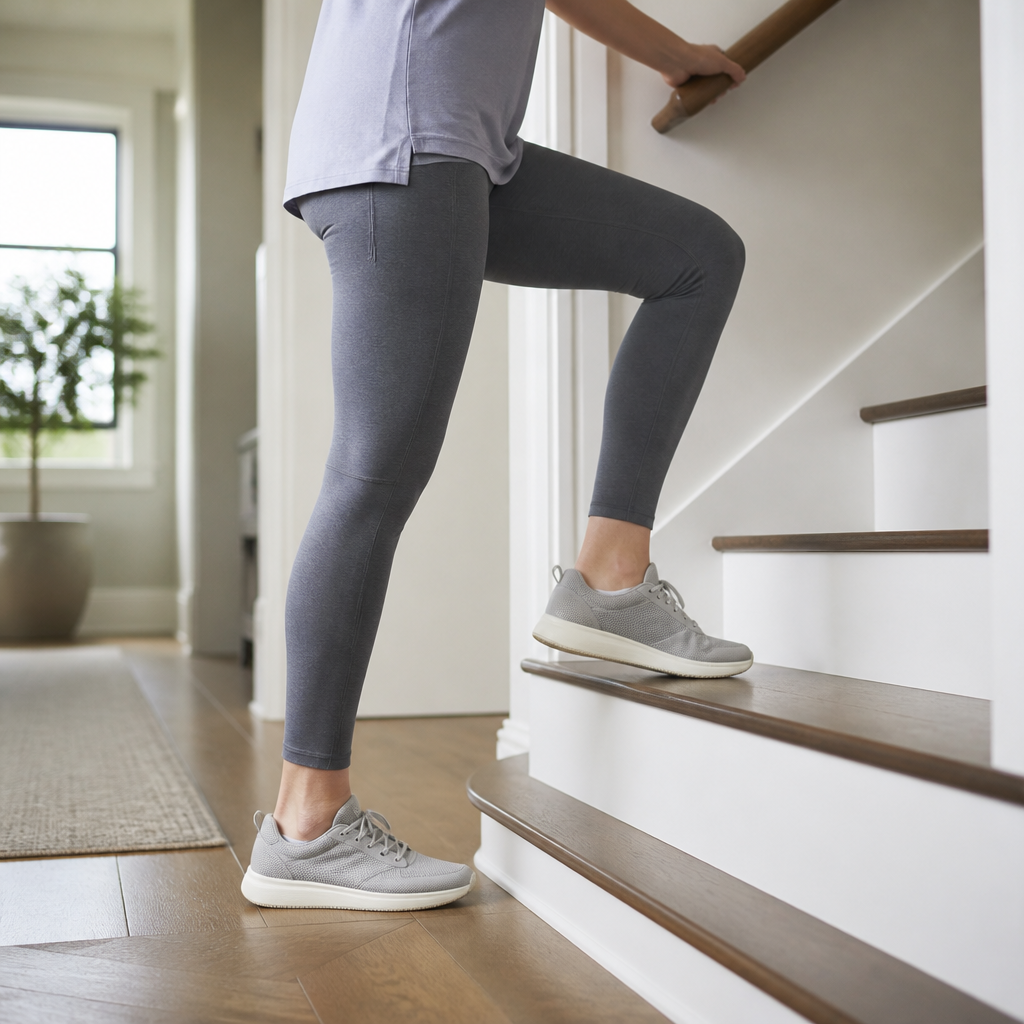
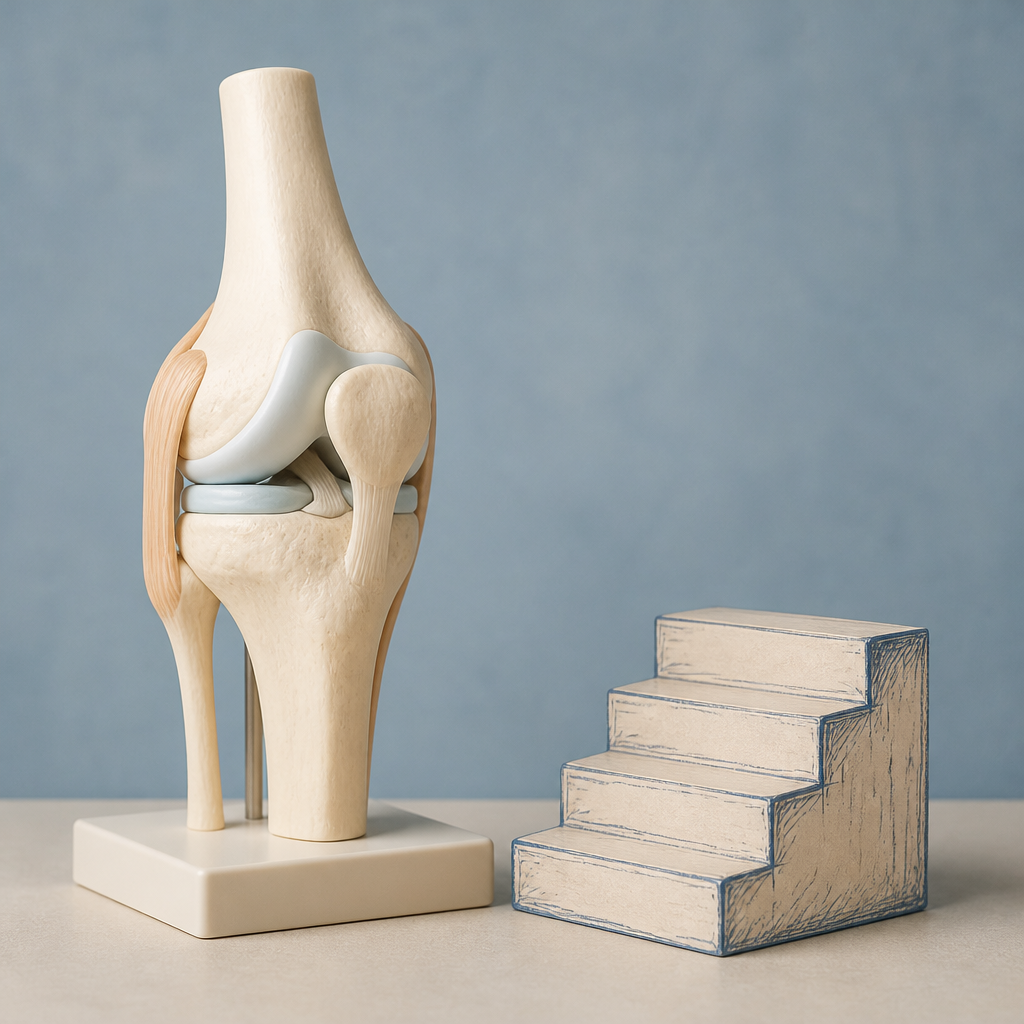
The kneecap sits in a groove at the front of the thigh bone, and cartilage lines that groove to absorb pressure as you climb. When that cartilage is healthy and well lubricated, the surfaces glide with little friction. When it is thinned, irritated or inflamed, the same movement produces the sharp or aching pain many people describe on stairs.
The Climb and the Descent Work Differently
Going down is usually harder on the knee than going up. On the descent, your quadriceps lengthen while they hold back your body weight, so the joint takes the impact of each step rather than pushing you upward. Many people with knee joint pain on stairs notice the worst symptoms on the way down, even when the climb felt manageable.
In practice, this pattern tells you something useful. If descending hurts more than ascending, the problem is often muscular control or irritation under the kneecap rather than a purely mechanical fault. That distinction shapes which fix will help you most.
Why the Kneecap Is the Usual Pain Source
Pain felt around the front of the knee during stairs usually comes from the kneecap joint. The pressure on that joint rises as the knee bends, which is why stairs, squatting and sitting for long periods often provoke the same complaint. If your pain worsens when you sit in a cinema seat with your knees bent for a long time, the stair pain is probably coming from the same source.
Cartilage Wear From Osteoarthritis
Osteoarthritis is the most common form of arthritis in the knee, and it involves the gradual breakdown of cartilage. As that cushion thins, the bones beneath it have less protection, and the joint becomes stiffer and more painful under load. Stairs expose this problem quickly because they ask the thinned surfaces to handle high pressure with every step.
Many people first notice osteoarthritis as a mild ache after activity that clears with rest. Over time, the same knee may hurt during the first few steps of the morning, then after climbing, and eventually during long walks. The pattern is gradual, which is why people often wait months before they connect it to the stairs in their home or office.
Early Signs Worth Tracking
Track when the pain starts, how long it lasts and whether it eases with gentle movement. Stiffness that loosens within 30 minutes of walking is common in cartilage-related pain, while pain that gets worse with every flight tells you the load is outpacing the joint's capacity. Writing these notes for two weeks gives your clinician far more useful information than a general description.
What Cartilage Loss Does Not Mean
Cartilage loss is not a sentence to a life without stairs. Many adults live with osteoarthritis for years while managing symptoms through strength, weight control and pacing. The goal is to reduce the daily load and keep the surrounding muscles strong, which protects the function you still have.
Weak Thigh and Hip Muscles
Your quadriceps and hip muscles are the shock absorbers of the stair climb. When they are weak, the knee takes more of the work that should be shared across the whole leg. The result is often pain that feels like it comes from the joint, even though the root cause is a muscle that can no longer do its share.
This is one of the most fixable reasons on this list. Muscle strength responds to consistent training over weeks, and the benefit shows up quickly in how the stairs feel. Physical activity that builds muscle around the knee is also one of the recommended ways to relieve pain and stiffness, according to arthritis.org.
Why the Quadriceps Matter Most on Stairs
The quadriceps straighten the knee on the way up and control the bend on the way down. If they fatigue or underperform, the kneecap tracks less smoothly in its groove, and the surrounding tissues absorb more stress. Many people with stair pain have quadriceps that look fine at rest but tire within a few flights.
Simple Strength Habits That Work
Start with exercises you can control. Sit-to-stand repetitions from a firm chair, step-ups on a low step with a handrail, and resistance band work for the hips are all practical choices. Choose a pace that leaves you tired but not pained, and stop if the joint swells afterward. A physical therapist can tailor the routine if you have significant pain or a recent injury.
Pro tip: Do your strength work on alternate days rather than daily at first. Muscles need recovery time, and a steady routine you can keep for 8 to 12 weeks will beat an intense week followed by a month of avoidance.
Extra Body Weight and Knee Load
Body weight is the most direct load on your knees. Every extra pound adds force to the joint with each step, and stairs multiply that force because the knee bends deeper under the body. When you climb five or six flights a day, small differences in body weight add up to a meaningful difference in daily stress.
The good news is that modest changes can help. Arthritis.org notes that losing even a little weight can help people with knee osteoarthritis, and that losing more can help significantly. In one study summarized on that site, adults who lost 20% or more of their body weight reported less pain and walked farther in a six-minute test than those who lost less than 5%.
The Weight Connection Is More Than Mechanics
The link between weight and knee pain is more complex than the extra force alone. Body fat also affects the joints through inflammation and other body-wide processes, so losing weight can help even when the knee's load changes only a little. This is why weight management often improves knee symptoms beyond what the arithmetic would predict.
Setting a Realistic Goal
Aim for steady changes rather than a crash plan. Reducing portion sizes, walking on flat ground most days and avoiding carrying heavy bags up stairs can all lower the daily burden. Even if your weight does not change much, reducing how often you climb stairs in a day still eases the load on the joint.
Tendon and Bursa Inflammation
Tendons connect muscle to bone, and bursae are small fluid-filled sacs that cushion movement around the knee. When either becomes inflamed, the pain is often sharp and localized, and stairs can provoke it quickly. Tendonitis commonly develops from repetitive motion or strain, while bursitis can cause swelling, pain and discomfort around the joint.

These problems are often mistaken for cartilage pain because they show up in the same place. The difference is that tendon and bursa pain tends to be tender when you press on a specific spot, and it may flare after a sudden increase in activity, such as a long hike or a week of extra stair use.
Telling Tendon Pain From Joint Pain
Press gently along the front of the knee, just below the kneecap, and along the inner and outer edges. Pain that matches a specific point, especially if it worsens when you press it, suggests a tendon or bursa source. Diffuse aching deep inside the joint is more typical of cartilage-related pain.
What Helps in the Short Term
Reduce the activity that provoked the flare and avoid pushing through sharp pain. Ice can help with swelling and short-term discomfort, while heat often feels better for chronic stiffness. If the flare lasts more than a couple of weeks or keeps returning, have a clinician check the tendon before the problem becomes a longer-term injury.
Meniscus and Ligament Injuries
The meniscus is a C-shaped piece of cartilage that cushions the joint between the thigh bone and shin bone. Ligaments hold the knee steady during movement. Injuries to either can make stairs feel unstable, and they often need a proper medical assessment rather than home care alone.
Some injuries come from a single twist or fall, while others develop slowly through wear. Either way, the symptoms can be confusing. You might feel a click, a catch or a sense that the knee is not fully under your control. Those signs deserve attention, especially if they appear after an identifiable event.
Locking, Catching and Giving Way
Locking means the knee suddenly will not straighten fully, while catching is a sharp pain during a specific movement. Giving way describes a moment when the knee buckles under you. On stairs, giving way is especially risky because a fall can cause a more serious injury, so treat it as a reason to stop using the stairs until you have been evaluated.
Why Imaging and Exams Matter
Meniscus and ligament injuries are hard to diagnose from symptoms alone. A physical examination, and sometimes imaging, helps separate a structural injury from wear-related pain. Accurate diagnosis changes the treatment plan, which is why guessing and waiting can make the outcome worse.
Stiffness and Poor Joint Lubrication
Stiffness is the sixth reason, and it often ties the other five together. A healthy knee contains fluid that lubricates the joint surfaces, letting them move smoothly. When that lubrication is reduced, or when inflammation thickens the fluid's effect, each step feels tight and reluctant, especially after you have been sitting or sleeping.
This type of stiffness usually feels worst in the first movements after rest. You might stand from bed or a chair and take a few careful steps before the knee loosens. The stiffness then eases, but it returns after long periods of stillness or after a busy day on your feet.
Post-Rest Stiffness Versus Active-Day Fatigue
Post-rest stiffness is typically a lubrication and mobility issue, and it often improves with gentle movement and a steady routine. Active-day fatigue is more about the load you placed on the joint, and it usually improves with rest and elevation. Knowing which pattern you have helps you choose the right response.
Rest, Elevation and Temperature
Rest and elevation can reduce swelling and stop further irritation during a flare. Rest is not a long-term plan, though. A joint that is never moved becomes stiffer, so use short breaks rather than full inactivity. Ice suits the swollen, hot knee, while heat often suits the chronic, achy knee that feels better with warmth.
Climbing Stairs With Less Knee Pain
You cannot always avoid stairs, but you can change how you climb them. Small technique changes often reduce pain within a few days, and they cost nothing. The aim is to share the load between both legs, keep the knee moving smoothly and avoid forcing the joint through its most painful range.
Use the handrail every time, even on short flights. It takes a little weight off the knee and gives you balance, which matters most when the joint feels unstable. Plant your whole foot on each step rather than balancing on the ball of the foot, which places more stress on the front of the knee.
Step Patterns That Reduce Strain
Lead with your stronger leg when going up, and lead with your weaker leg when going down. This commonly used approach lets the stronger leg do the lifting and lets the weaker leg control the descent in a supported way. Slow down and pause on the landing if you need to, rather than rushing the next flight.
Key insight: The knee rarely needs to be protected from stairs entirely. It usually needs stairs that are shared, paced and supported until the muscles and joint tissues can handle the load again.
Planning Your Day Around Stairs
Split heavy trips into smaller loads, and avoid carrying shopping or laundry up several flights in one go. If you can, schedule the most demanding climbs for times when your knee feels best. Those simple planning choices reduce the number of painful steps you take each day.
Pro tip: Keep a short note of how many flights you climb on a difficult day and how the knee feels the next morning. Patterns become clear within a week, and you can see which habit is causing most of the flare.
Comparing Your Options
There is no single fix for knee pain on stairs, and most people do best by combining approaches. The table below compares three common options by what they do well and where they fall short. Use it to match your situation to a sensible first step, not as a replacement for a clinical opinion.
| Approach | Where It Helps | Where It Falls Short |
|---|---|---|
| Rest, elevation, ice and heat | Calms short-term swelling and irritation, and costs nothing to start. | Does not rebuild muscle strength or address the underlying cause of repeated flares. |
| Physiotherapy-led strengthening | Builds thigh and hip strength, improves control on stairs and suits most people with knee pain. | Takes consistent effort over several weeks, and results depend on sticking with the program. |
| Daily liquid joint supplement (Revit Arthro) | Fits into a simple daily habit and supports joint lubrication and cartilage health alongside movement and strength work. | Works as daily support rather than a fast fix, and it does not replace diagnosis or treatment of an injury. |
In practice, the most useful combination is strength work plus pacing, with a supplement added if you want daily joint support. Rest alone rarely solves the problem, and a supplement alone will not compensate for a weak leg. Choose the mix that matches your pain pattern and your clinician's advice.
Where a Supplement Fits
Revit Arthro is a German-engineered liquid joint supplement designed for daily mobility support. It contains Hyalutidin HC, a high-purity hyaluronic acid combined with chondroitin, formulated to support joint lubrication and cartilage health without injections. The daily dose is 30 mL, which makes it easy to fit into a morning routine alongside your strength exercises.
Think of the product as one piece of a daily joint care plan. It suits people with age-related stiffness who want consistent support between movement sessions, and it is most useful when used every day rather than only during bad weeks. Results vary between people, and no supplement can promise that stairs will stop hurting.
Setting Expectations for Daily Use
Joint supplements usually need steady use over several weeks before anyone can judge their effect. Keep notes on your stiffness, your stair tolerance and how often you need rest days, so you have a clear baseline. If you see no change after a reasonable trial, talk with your clinician rather than simply increasing the dose.
You can learn more about the product at Revitnature.in, where the ingredients and daily usage are explained in detail.
Pro tip: Take your daily supplement at the same time each day and log it next to your stair notes. Consistency makes it much easier to tell whether any change you notice is linked to the routine.
When Stair Pain Is a Warning Sign
Most stair pain is manageable at home, but some symptoms need prompt medical attention. Hot, red or rapidly swelling knees, fever with knee pain, or an inability to bear weight should be checked the same day. Night pain that wakes you, or a knee that gives way repeatedly, also warrants an appointment rather than waiting out the flare.
Symptoms That Need a Clinician Soon
Book an assessment if pain persists beyond two weeks despite rest and strength work, if the knee locks or catches, or if you notice a new deformity or clear weakness. A clinician can examine the joint and decide whether imaging or a referral to a specialist makes sense.
What to Track Before Your Appointment
Bring a simple log that includes when the pain began, which movements provoke it, how many stairs you climb daily, any swelling and what has helped. This record speeds up diagnosis and helps your clinician choose the right next step.
Frequently Asked Questions
Why does my knee hurt only when I climb stairs?
Stairs increase the pressure on the kneecap and cartilage because the knee bends under your full body weight. Pain that appears only on stairs often points to joint loading, weak thigh muscles or irritation around the kneecap rather than a problem that is always present.
Is it normal for knee pain to be worse going down stairs?
Yes, this is common. Going down requires the quadriceps to control your body weight as the knee bends, so weakness or irritation shows up more clearly on the descent. If the pain is severe or the knee gives way, get it checked.
Can a daily joint supplement help with knee pain on stairs?
A daily joint supplement can support joint lubrication and cartilage health as part of a wider plan that includes strength work and weight management. It is not a guaranteed fix for stair pain, and it does not replace medical care for an injury or a worsening condition.
How long should I use a joint supplement before judging the result?
Most people need several weeks of consistent daily use before they can judge a change. Track your stiffness, stair tolerance and rest days during that time, and talk with your clinician if you notice no difference after a reasonable trial.
Should I stop using stairs completely if my knee hurts?
Usually not. Complete avoidance tends to weaken the muscles that support the knee, which can make the pain worse over time. Reduce the number of flights, use the handrail and pace yourself, unless a clinician advises stricter limits after an injury.
Is heat or ice better for a stiff knee?
Ice tends to suit a swollen, hot knee during a flare, while heat often feels better for chronic stiffness that improves with warmth. If you are unsure which applies to you, use the one that feels more comfortable and note the result.
What has helped your knees on stairs, and what did not? We would love to hear about your experience in the comments.


