

If your knees feel stiff after a night's sleep, or your hips complain after a long day on your feet, the problem often starts in the cartilage. Cartilage is the smooth, slippery tissue covering the ends of your bones, and once it thins, it does not rebuild quickly. This guide is for anyone shopping for a chondroitin supplement India residents can buy today. It explains what chondroitin does inside the joint, what the evidence does and does not support, and how to choose a product without getting lost in marketing claims.
Table of Contents
- Quick Takeaways
- What Chondroitin Is and Where It Sits in Your Joint
- How Chondroitin Protects Cartilage
- Chondroitin and Glucosamine
- Hyaluronic Acid and Chondroitin Together
- Choosing a Chondroitin Supplement in India
- Comparing Chondroitin Approaches
- Safety and Interactions
- Realistic Expectations
- Frequently Asked Questions
- References
Quick Takeaways
| Key Insight | Explanation |
|---|---|
| Chondroitin is a cartilage component | It is a sugar chain found attached to the proteoglycans in cartilage, where it helps the tissue attract and hold water. |
| The evidence is promising but not settled | Reputable health sources describe chondroitin's benefits as theoretical, so treat it as supportive care rather than a fix. |
| Read the amount per serving | Compare the milligrams of chondroitin per daily serving on the label, not the size of the bottle or the number on the front. |
| Pick the form you will actually take | A liquid or capsule only works if you take it every day, so choose the format that fits your routine without skipped doses. |
| Check with a doctor if you take warfarin | Chondroitin is listed as a product to discuss with your care team if you take warfarin or have diabetes, kidney, liver, or heart disease. |
| Set a fixed trial window | Track morning stiffness and activity tolerance on a simple scale for several weeks, rather than judging the product on one good or bad day. |
What Chondroitin Is and Where It Sits in Your Joint
Cartilage is connective tissue that sits between bones where they meet, and it lets them glide past each other with very little friction. The Cleveland Clinic describes cartilage in exactly these terms, as connective tissue between your bones. Most of cartilage is water, held in place by a dense network of collagen fibers and large molecules called proteoglycans.

Chondroitin sulfate is one of the main sugar chains attached to those proteoglycans. Its job is to attract and hold water, which gives cartilage its ability to resist compression. When you walk or climb stairs, that water-rich matrix spreads the load instead of letting bone take the full impact.
Where supplement chondroitin comes from
Most chondroitin sold as a supplement is processed from animal cartilage. The source is printed on some labels and missing from others, which matters if you avoid animal products for religious or dietary reasons. If the source is not stated clearly, ask the seller before you buy.
Why absorption is still debated
Chondroitin is a large molecule, and researchers still disagree about how much of an oral dose reaches cartilage intact. That open question is one reason we tell customers to judge any product by transparency and realistic expectations, not by bold promises about rebuilding joints.
How Chondroitin Protects Cartilage
The protective story for chondroitin is about slowing damage rather than repairing it. The Arthritis Foundation notes that glucosamine and chondroitin are thought to protect chondrocytes, the cells that help maintain cartilage structure. The same source states that, in theory, these supplements may slow cartilage breakdown.
A joint supplement can only support cartilage if the ingredient reaches the tissue, the tissue responds, and daily habits do not work against it.
Chondrocytes, the cells that maintain cartilage
Cartilage has very few cells, and chondrocytes are the ones responsible for keeping the matrix in working order. Chondroitin is thought to support these cells, which is why it is often described as a maintenance ingredient rather than a repair ingredient. Maintenance is a slower, quieter process, and it rarely produces a dramatic change in a week.
Slowing breakdown, in theory
The Cleveland Clinic describes glucosamine and chondroitin as possibly slowing the breakdown of cartilage, which may reduce pain and swelling. The operative word is possibly. Some patient education material on the topic also says that the potential effect is not yet proven for every person with joint pain.
What protection looks like day to day
In practice, people who report benefit tend to describe fewer stiff mornings and less fatigue after active days, not a sudden return to full mobility. Protection is a slow goal, and it works best alongside regular movement, a healthy body weight, and steady use of the product rather than occasional doses.
Pro tip: Take your chondroitin at the same time each day, such as with breakfast, so the habit sticks and you can judge the results over weeks rather than guessing from memory.
Chondroitin and Glucosamine
Chondroitin and glucosamine are often sold together, and many people assume they do the same job. They do not. Glucosamine is an amino sugar that the body uses to build cartilage components, while chondroitin is the sulfated sugar chain that helps cartilage hold water. Both are studied for joint support, but they are separate ingredients with separate roles.
Why the two ingredients are sold together
Combination products are popular because they fit the idea of one bottle that covers the whole cartilage story. The Cleveland Clinic's own overview is titled around both ingredients for this reason. That convenience is real, but it does not automatically mean the combination is better than either ingredient used alone.
Reading a combined label honestly
When a label lists glucosamine and chondroitin together, check the amount of each ingredient per serving. A product with a small dose of chondroitin and a large dose of glucosamine is not the same as a product built around chondroitin. The label should tell you what you are actually getting, and a vague blend listing is a warning sign.
Hyaluronic Acid and Chondroitin Together
Hyaluronic acid is a different molecule with a different job. It is a major part of the synovial fluid that lubricates the joint, and it helps the joint move smoothly under load. Chondroitin works inside the cartilage, while hyaluronic acid works in the joint space, so the two are often discussed as complementary rather than interchangeable.
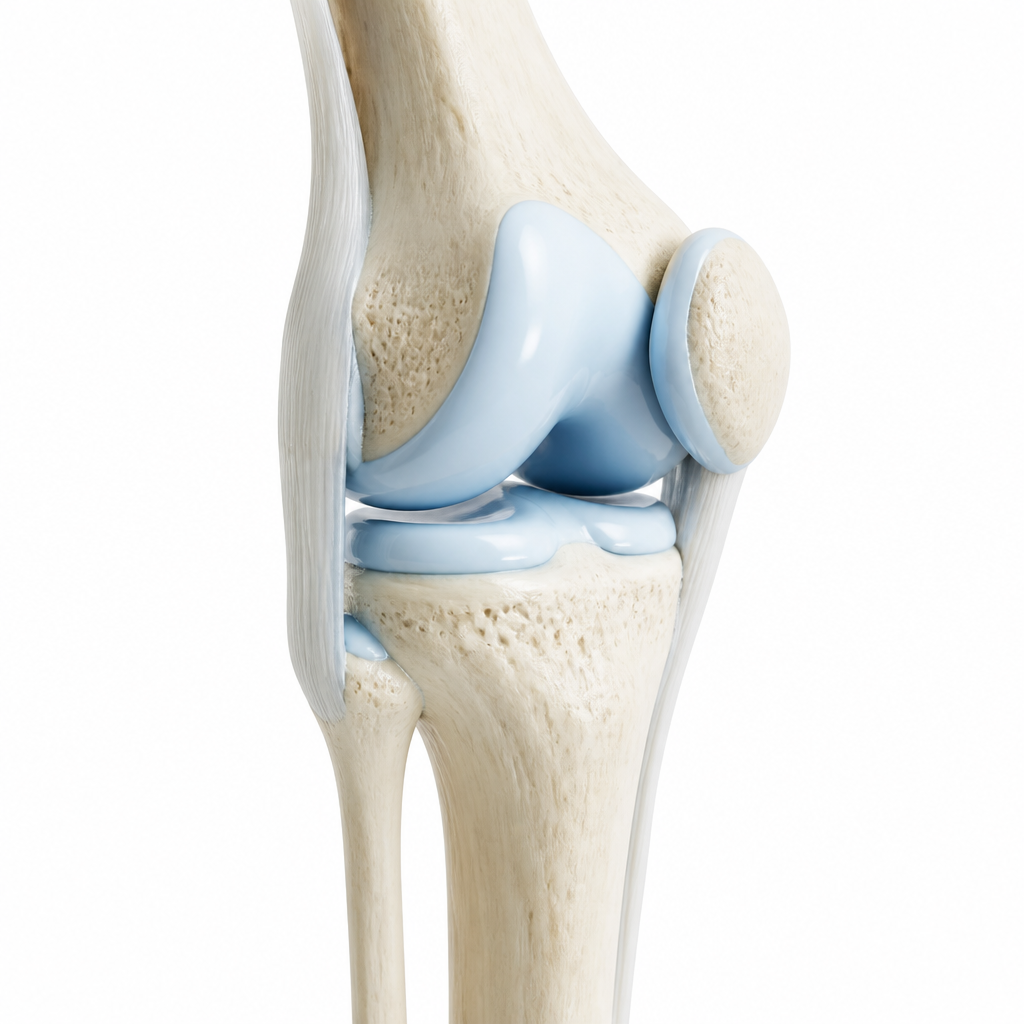
Lubrication and cartilage are different jobs
Joint lubrication matters most when you move after rest, because stiffness often comes from fluid that has not yet spread through the joint. Cartilage support matters over a longer timeframe, because it concerns the tissue itself. A product that addresses both sides of the joint is designed around that difference.
What our formula is designed to do
Revit Arthro combines Hyalutidin HC, a high-purity hyaluronic acid, with chondroitin in a 30 mL daily liquid. It is built for everyday joint care, from post-rest stiffness to fatigue after an active day. We describe it as formulated to support joint lubrication and cartilage health, not as a treatment for any disease.
Choosing a Chondroitin Supplement in India
Most buyers compare price first and dosage second, which is backwards. A cheap bottle with a low chondroitin amount is a poor deal even if the price looks good. Start with the label, then check the form and the manufacturer, and only then compare prices.
Read the chondroitin amount per serving
Look for the milligrams of chondroitin in one daily serving, and compare that number across products. If the label only shows a proprietary blend total, you cannot tell how much chondroitin you are taking. Clear labeling is the first filter we recommend for any chondroitin supplement India shoppers consider.
Check the source and the manufacturer
Confirm who makes the product, where it is manufactured, and what the source of the chondroitin is. A named manufacturer with a traceable address is more useful than a brand name alone. If the seller cannot answer basic questions about sourcing, move on.
Liquid or capsule: pick the form you will keep taking
Liquids suit people who have trouble swallowing tablets, while capsules are easier to carry when you travel. The best form is the one you will take every day without skipping. A supplement that sits unopened in the cupboard offers no joint support at all.
Pro tip: Photograph the label of the product you buy, including the batch number and expiry date, so you can compare it with the next bottle and report any quality problem to the seller.
Comparing Chondroitin Approaches
Most people looking for joint cartilage support choose between three practical approaches. Each has a different role, and none of them replaces medical advice for a diagnosed joint condition. The table below shows where each one tends to fit in a daily routine.
| Approach | What It Offers | Where It Fits |
|---|---|---|
| Chondroitin sulfate capsules or tablets | A solid, measurable dose of chondroitin that is easy to store and carry, with the usual uncertainty about how much reaches cartilage. | People who prefer a familiar format and can keep a steady daily routine. |
| Liquid chondroitin combined with hyaluronic acid, such as Revit Arthro | A daily 30 mL liquid that targets joint lubrication and cartilage support together, with a single dose to remember. | Adults with post-rest stiffness or fatigue after active days who want one daily product. |
| Movement and weight management without a supplement | Regular low-impact activity and a healthy body weight, which reduce load on cartilage and support joint function over time. | Everyone, as the base layer, whether or not they also take a supplement. |
In our experience, the most common mistake is treating a supplement as a substitute for movement. Choosing one approach and ignoring the others usually gives weaker results than combining a supplement with consistent activity. A supplement works best as one layer of a routine, not the whole plan.
Safety and Interactions
Chondroitin is a dietary supplement, and the FDA has not approved it for medical use. The Cleveland Clinic states that it may contain ingredients not listed on the label, which is why careful sourcing matters. Treat safety as a conversation with your doctor, not a box to tick.
Conditions to mention before you start
Tell your care team if you have diabetes, heart disease, kidney disease, liver disease, or stomach or intestinal problems. Also mention any allergic reaction to chondroitin, glucosamine, sulfonamides, other supplements, foods, dyes, or preservatives. If you are pregnant, trying to conceive, or breastfeeding, get advice before starting.
Medicines that need a check, starting with warfarin
Warfarin is the medicine most often flagged as a possible interaction with glucosamine and chondroitin products. If you take any blood thinner or other prescription drug, bring the product label to your appointment. Give your doctor a full list of medicines, herbs, and supplements, including the ones you think are harmless.
Overdose and what to do
Do not take more than the label or your care team directs, and do not double up after a missed dose. If you think you have taken too much, contact a poison control center or go to an emergency room straight away. Parents should also speak with a doctor before giving any joint supplement to a child.
Realistic Expectations
The biggest reason people quit a joint supplement is that they expected a fast change. Cartilage changes slowly, and supplements that support it work on a similar timescale. A realistic plan judges the product over weeks, with clear notes on how your joints feel.

How long to give a supplement
A reasonable trial window is several weeks of daily use at the labeled dose, long enough to notice patterns on both good and bad days. If you see no change after that period, talk to your doctor about other options rather than increasing the dose on your own. More is not always better, and higher doses do not guarantee a faster result.
A simple stiffness log
Each morning, rate your stiffness from one to five and note how long it lasts after you get up. At the end of the day, note how your joints felt after activity. A week of notes shows whether the routine is helping far more reliably than memory does.
Pro tip: Keep your log on the same phone or notebook for the whole trial, and avoid changing your exercise routine during the same weeks, so any change you see is easier to attribute to the product.
Frequently Asked Questions
What does chondroitin actually do in the joint?
Chondroitin is a sugar chain that helps cartilage attract and hold water, which supports its ability to absorb pressure. It is thought to support the cells that maintain cartilage, though the benefits are described as theoretical in most reputable sources.
Is a chondroitin supplement India buyers can purchase approved by the FDA?
No. The FDA has not approved chondroitin for medical use, and it is sold as a dietary supplement. That means the label is your main source of information, so check the dose, source, and manufacturer before buying.
How long does it take to notice a difference?
Most people need several weeks of consistent daily use before they can judge the effect. Keeping a short daily log of morning stiffness and activity tolerance makes the comparison much more useful than relying on memory.
Can I take chondroitin with glucosamine?
Many people take them together, and many products combine them. Check the amount of each ingredient per serving, and ask your doctor first if you take warfarin or have a condition such as diabetes, kidney disease, or liver disease.
Is a liquid form better than capsules?
Neither form is clinically superior on its own. The better choice is the one you will take every day, so pick the format that fits your swallowing comfort and daily routine.
Should I take chondroitin if I have a diagnosed joint condition?
Talk to your doctor before starting, especially if you are already on medication. A supplement can sit alongside a treatment plan, but it should not replace advice for a diagnosed condition.
Have you tried a chondroitin supplement, and what changed in your joints after several weeks of daily use? We would like to hear your experience in the comments.
References
- Cleveland Clinic overview of glucosamine and chondroitin uses, precautions, and interactions
- Arthritis UK guide to chondroitin uses and side effects
- Arthritis Foundation review of glucosamine and chondroitin for osteoarthritis pain
- Patient education article on the truth about glucosamine and chondroitin sulfate


